
What is a Lightning Surge Protector and How to Install It
Lightning Surge Protectors for Cell Phone Signal Boosters
Lightning surge protectors, also called lightning surge arresters, are a highly recommended accessory for cell phone signal boosters. While they are not required for a booster to function, they add an important layer of protection against sudden voltage spikes and nearby lightning strikes that can damage your equipment.
In this guide, we'll explain what a lightning surge protector is, how it works, and how to install and ground it properly.
We fix poor cell phone signal! Find the right signal booster for you:




What is a Lightning Surge Protector?
A lightning surge protector, also called lightning surge arresters, is a safety device designed to protect your cell phone signal booster and connected components from sudden electrical surges caused by nearby lightning activity.
It provides a controlled path for excess electrical energy, helping protect your equipment and reduce the risk of costly damage.
How Do Surge Protectors Work?
Lightning surge protectors work by giving excess electrical energy a safe place to go. When lightning strikes nearby or a sudden voltage spike occurs, that energy looks for the easiest path to travel. Without protection, it can move straight down the antenna cable and into your signal booster and other connected components.
When a lightning surge protector is installed, it interrupts that path. Instead of allowing the surge to continue through the system, the protector redirects the excess energy to a grounding point. Once grounded, the energy is safely dissipated before it can reach or damage your equipment.
You can think of a lightning surge protector like a fuse in an electrical system. During a surge, it absorbs or redirects the excess energy and prevents it from traveling further down the line. This protects your signal booster and indoor components and keeps electrical energy from entering the building.
Most lightning surge protectors use a replaceable internal cartridge to handle these events. If a surge occurs, the cartridge can be swapped out, restoring protection without needing to replace the entire system.
Do Cell Phone Boosters Need Lightning Surge Protectors?
A lightning surge protector is not required for a cell phone signal booster to function, but it is strongly recommended, especially for systems with outdoor antennas. These protectors help provide surge protection from lightning by reducing the risk of damage from electrical surges caused by nearby strikes, though a direct strike can still overwhelm electronic equipment.
Recommended options include:
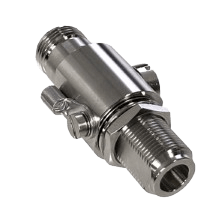
Designed for 50-ohm signal booster systems, this lightning arrestor helps protect your equipment from surge damage with minimal signal loss and a replaceable protection cartridge. A bundled option with a jumper cable included is also available.
Shop Now: $89.99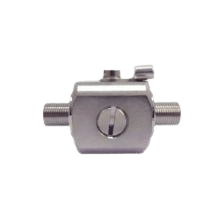
Built for 75-ohm RF systems, this surge protector offers reliable lightning surge protection with low attenuation. A bundled option with a jumper cable included is also available.
Shop Now: $89.99How to Install a Lightning Surge Protector
A lightning surge protector is easy to install, but proper placement and grounding are essential for effective protection.
Step 1: Make Sure You Have the Right Surge Protector for Your Cellular Booster
If you're wondering how to find a surge protector that's compatible with your system, start by confirming whether your booster uses 50 Ohm or 75 Ohm components.
If you're unsure which one your booster uses, check the manual or look at the connector type. Systems with N-type or SMA connectors typically use 50 Ohm components, while systems with F-type connectors usually use 75 Ohm components.
Step 2: Installing the Lightning Surge Protector
The lightning surge protector should be installed between the outdoor antenna and the signal booster, as close as possible to where the antenna cable enters the building.
Connect one side of the surge protector to the outdoor antenna, and connect the other side to the coaxial cable that runs inside to your booster. In many setups, the antenna and surge protector use the same type of connector, so a short jumper cable is often needed to complete the connection.
Step 3: Grounding the Lightning Surge Protector
Proper grounding is one of the most important parts of installing a lightning surge protector. Without a ground connection, the surge protector cannot safely redirect excess electrical energy away from your system.
To ground the surge protector, attach a grounding wire to the grounding terminal on the unit and connect it to an approved grounding point, such as a grounding rod or grounding bus.
Grounding Options and Important Notes
Will a surge protector work without grounding?
No. A lightning surge protector must be connected to a proper grounding point to function correctly. Without grounding, excess electrical energy has nowhere to safely dissipate.
Common grounding points include:
- Ground rod (most common): A metal rod installed outside and driven into the ground according to local electrical codes.
- Metal electrical service panel: Often already connected to a grounding system.
- Metal electrical raceway or conduit: Typically grounded; a grounding strap may be used if permitted by local code.
- Water pipe: Must be in direct contact with the earth and meet local code requirements.
- Metal building frame or structure: Use only if no other approved grounding option is available.
Avoid attaching the grounding wire to materials that lead inside the building or are not approved grounding points.
When grounding your system, always follow local electrical codes. If you're unsure where to ground the surge protector or how to do it safely, a licensed electrician can help ensure everything is installed correctly.
What To Do If a Surge Strikes
As mentioned earlier, lightning surge protectors are designed so that typically only the internal cartridge takes the impact. If a surge happens, you can remove the spent cartridge inside the surge protector and replace it with a new one. This restores the surge protector's ability to redirect excess electrical energy and helps keep the rest of your system protected.
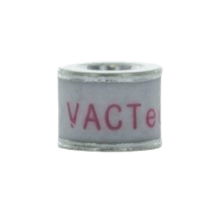
A replaceable cartridge that restores lightning surge protection without the need to replace the entire surge protector.
Shop Now: $4.99Lightning Surge Protector Installation Help
Lightning surge protectors are a simple but important part of protecting a cell phone signal booster system, especially when an outdoor antenna is involved. When installed correctly and properly grounded, they help reduce the risk of damage from electrical surges and can save time and money if a surge does occur.
If you have questions about choosing the right lightning surge protector, grounding options, or installation steps, our team is here to help. Give us a call at 1-800-568-2723 or reach out anytime for personalized support.


Money Back Guarantee

Technical Support