I'M LOOKING FOR MY...
Wilson Amplifiers is proud to provide complete cell booster installation services in Spokane.
Spokane is the economic center of the Inland Northwest, serving a metro of around 620,000 people across eastern Washington and northern Idaho. Yet many healthcare systems, government offices, universities, and businesses that anchor the city are plagued by poor indoor cellular coverage.
The city sits in a valley along the Spokane River, with rolling hills and Rocky Mountain foothills rising on the edges. That geography creates uneven signal conditions, particularly for buildings in lower corridors or hillside neighborhoods away from the valley floor. Older brick and masonry buildings throughout Downtown and historic districts also block outdoor signal.
Spokane's harsh winters have also pushed commercial construction toward heavily insulated, weather-resistant building envelopes that further limit signal penetration indoors.
Amidst these factors, a professionally installed Distributed Antenna System (DAS) or cell phone signal booster is the most reliable solution for reliable in-building cellular coverage that supports day-to-day business operations.
Wilson Amplifiers provides enterprise DAS and commercial cell signal booster installation throughout Spokane and the broader Inland Northwest region for organizations that need uninterrupted cellular coverage within their properties, year-round.
Every system is designed around your building's layout, materials, and signal conditions. In Spokane, that includes masonry construction, valley terrain, heavily insulated building envelopes, and large healthcare or educational footprints where coverage gaps can disrupt daily operations.
We install uninterrupted indoor cellular systems for organisations across Spokane's major industries, including:
Professional Installation For Spaces Up To 15,000 Sq Ft
Spokane's neighborhoods range from older homes near Downtown and the South Hill to newer suburban developments extending across the valley, along with small businesses throughout the city. Older construction, hillside locations, and harsh winter conditions can all affect indoor signal reliability.
Wilson Amplifiers pre-configured cell phone signal booster systems come with professional installation included, so that homes and small businesses in Spokane get dependable indoor coverage, 24/7.
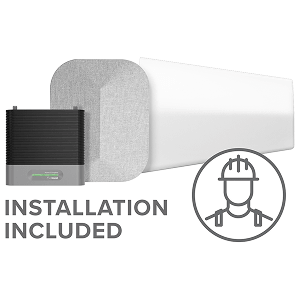
weBoost Home Complete Installed
$1,499.99
158 Reviews
Add to Cart View Home Installed Boosters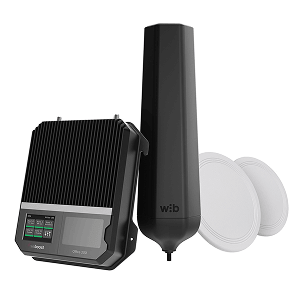
weBoost Office 300 Installed
$3,799.99
55 Reviews
Add to Cart View Enterprise BoostersGive us a call, and a member of our team will help you find a trusted, local cell signal booster installer near you.
Call Now| 99201 | 99202 | 99203 | 99204 |
| 99205 | 99206 | 99207 | 99208 |
| 99209 | 99210 | 99211 | 99212 |
| 99213 | 99214 | 99215 | 99216 |
| 99217 | 99218 | 99219 | 99220 |
| 99223 | 99224 | 99228 | 99251 |
| 99252 | 99254 | 99255 | 99256 |
| 99258 | 99260 | 99299 |


Multiple locations, including the headquarters
All-Carrier Active DAS – Distribution Center

What is a Cell Phone Signal Booster?
A cell phone signal booster is a device that amplifies existing cellular signals, improving voice calls, text messages, and data speeds inside buildings. It works by capturing weak outdoor signals, amplifying them, and rebroadcasting them indoors for all cellular devices simultaneously.
How do Signal Boosters work?
Signal boosters use three components: an outdoor antenna to capture existing cellular signals, an amplifier to boost those signals, and an indoor antenna to rebroadcast the improved signal throughout your space. All connected devices on any carrier benefit automatically.
Do Signal Boosters work?
Yes — signal boosters are highly effective when there is some existing outdoor signal to amplify. They significantly improve voice calls, texts, and data performance for all cellular devices in the coverage area, on all major carriers simultaneously.
What are the Pros and Cons of your Cell Phone Boosters?
Pros: works for all carriers simultaneously, no monthly fees, FCC-certified and carrier-approved, supports 5G/4G LTE. Cons: requires at least some existing outdoor signal — they amplify signal, they do not create it where none exists.
What is the Best Cell Phone Signal Booster for me?
The right booster depends on your space size, building materials, number of users, and outdoor signal strength. Contact us for a free consultation and our team will recommend the optimal solution for your specific situation.
What is the Best Cell Phone Signal Booster for Rural Areas?
For rural areas with very weak outdoor signals, we recommend high-gain boosters paired with directional (Yagi) outdoor antennas aimed at the nearest cell tower. Our team can assess your outdoor signal strength and recommend the appropriate system.
How do you install a Cell Phone Signal Booster?
Professional installation includes mounting the outdoor antenna at the highest point with the best signal reception, running coaxial cable to the amplifier, and positioning indoor antennas for maximum coverage. Our certified installers handle the entire process end-to-end.
Why do Signal Boosters Only Work Indoors?
Signal boosters are designed for enclosed spaces where building materials — concrete, steel, low-E glass — block outdoor cellular signals. They create a boosted indoor coverage zone where devices can connect more reliably to existing tower signals.
What is a Typical Cable Run for a Cell Phone Signal Booster?
Cable runs vary by installation, but typically range from 30 to 100+ feet. Longer cable runs require higher-gain amplifiers to compensate for signal loss. Our team assesses the optimal cable routing during the site survey at no charge.
What Antenna Setup should I get for my Cell Phone Signal Booster?
Urban areas with multiple nearby towers typically benefit from omnidirectional outdoor antennas. Rural areas with one dominant tower direction are better served by directional Yagi antennas that focus on the strongest signal source.
Do these Boosters Amplify 5G Signal?
Yes. Our modern signal boosters support 5G NR Sub-6GHz frequencies along with 4G LTE, ensuring compatibility with current and upcoming network standards across all major U.S. carriers.


