
Panel vs Dome Antennas: Which Indoor Antenna Do You Need?
The Key to Strong Indoor Coverage
Indoor antennas are an essential part of any cell phone booster system. They distribute boosted cell signals throughout your home, office, or building so your devices can connect seamlessly.
The two most common types are panel antennas and dome antennas. Understanding how each one works and where it performs best can help you choose the right setup for your space to maximize coverage.
We fix poor cell phone signal! Find the right signal booster for you:




What is a Panel Antenna and How Does it Work?
A panel antenna is a type of indoor antenna that broadcasts amplified cell signal in one focused direction. It's typically mounted on a wall and projects signal outward in a cone-shaped pattern, usually between 45° and 70°. This concentrated focus gives it higher dBi gain (or power) than other indoor antennas, allowing it to send a stronger signal farther into a specific area.
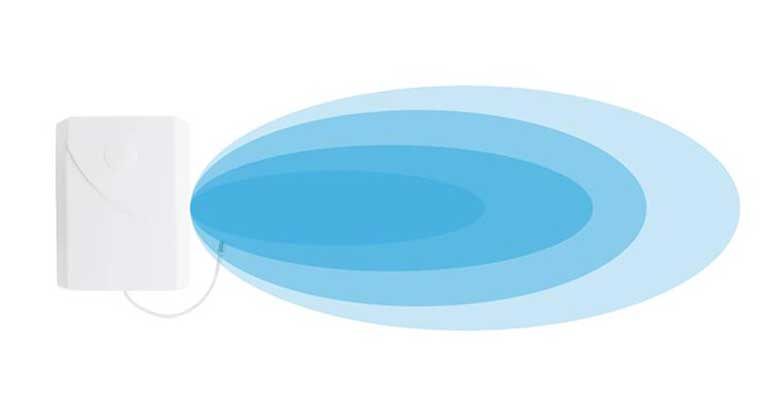
Because of their directional strength and easy installation, panel antennas are the most common choice in home signal booster kits. They're simple to mount when ceiling access is limited, and they work especially well in spaces that have interior walls, multiple rooms, or higher ceilings. The closer you are to the antenna's coverage cone, the stronger the signal you'll receive. For that reason, it's good to place them in high-priority areas like living rooms, home offices, or conference rooms.
Panel antennas also help overcome some of the challenges of indoor interference. Building materials like concrete, metal, glass, and insulation can block or weaken cell signal. A directional panel antenna minimizes this loss by concentrating the signal where you need it most, rather than spreading it thinly across the entire space. Depending on how strong your outdoor signal is, a panel antenna can typically provide up to 75 feet of indoor coverage under ideal conditions.
If you're dealing with weak outdoor signal or thick walls, a panel antenna is usually the better option. It can also be mounted upside down on a ceiling if needed to push signal to lower levels, though the strongest performance will always be in the room where it's installed.
Top Panel Antennas:
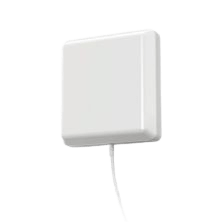
A high-gain 50 Ohm directional antenna built for WilsonPro boosters. It covers 617–2700 MHz across all major cellular bands for reliable 5G, 4G, and LTE performance. Compact and wall-mountable, it’s ideal for targeting coverage in specific rooms or zones and comes backed by a 2-year warranty for lasting durability.
Shop Now: $89.99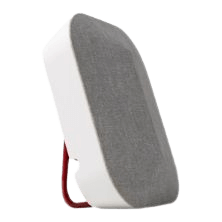
A high-gain directional antenna designed for home boosters. It enhances voice and data signals across 698–960 MHz and 1710–2700 MHz frequency bands, covering all major carriers. Compact and stylish with a fabric front, it’s easy to mount on a wall or place on a desk stand for strong, focused indoor coverage.
Shop Now: $99.99What is a Dome Antenna and How Does it Work?
A dome antenna is an indoor antenna designed to distribute boosted signal evenly in all directions. Mounted on the ceiling, it projects signal in a 360° horizontal pattern. You can think of its broadcast range as the lower half of a sphere. This makes it a type of omnidirectional antenna, which creates balanced coverage across open spaces.
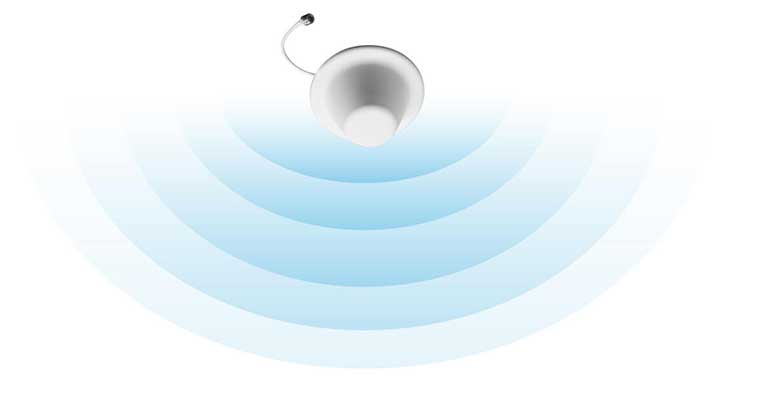
Because dome atennas spread signal evenly rather than focusing it, they're especially popular in business and commercial booster systems, where uniform coverage matters more than distance. They're also a great fit for one-story homes, open-concept offices, or retail spaces with drop ceilings. However, installation requires ceiling access, usually through an attic or a crawl space. It works best when ceilings are below 15 feet. If your ceilings are higher, a panel antenna will generally perform better.
Typical coverage for a dome antenna is around 50 feet, depending on how strong your outdoor signal is and how much interior interference exists. Under ideal conditions, like low ceilings and minimal obstructions, a dome antenna can fill a large area with reliable 4G, LTE, and 5G coverage.
Top Dome Antennas:
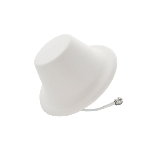
A high-gain omnidirectional antenna designed for ceiling installation in homes or offices. It enhances voice and data signals across 698–960 MHz and 1710–2700 MHz, delivering reliable 360° coverage for boosted 5G, 4G, and LTE performance. Features a 75 Ohm F-Female connector for easy integration with compatible building boosters.
Shop Now: $69.99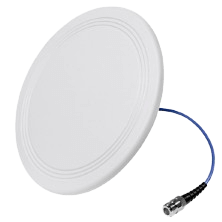
A discreet omnidirectional antenna that blends seamlessly into ceilings while delivering 360° signal coverage across all major cellular and WiFi frequencies (600-6000 MHz). Built from durable ABS material with plenum-rated cabling, it’s ideal for commercial or modern residential spaces needing reliable, long-term performance. Features a 50 Ohm N-Female connector for quick installation.
Shop Now: $159.99Panel vs Dome Antennas: Which is Best for My Setup?
Both panel and dome antennas improve indoor cellular coverage, but the right one for your setup depends on your space, layout, and installation access. While panel antennas focus their power in one direction, dome antennas spread it evenly in every direction.
Here's a quick side-by-side comparison:
|
Feature |
Panel Antenna |
Dome Antenna |
|
Broadcast Pattern |
Directional (cone-shaped, 45°–70° beam) |
Omnidirectional (360° horizontal spread) |
|
Mounting Location |
Wall or flat surface |
Ceiling (requires access above ceiling) |
|
Coverage Area |
Up to ~75 ft, depending on outdoor signal |
Up to ~50 ft, depending on outdoor signal |
|
Gain (Power) |
Higher (up to 10.6 dBi) |
Moderate (5.1–7 dBi) |
|
Best Ceiling Height |
Any height; good for high ceilings |
Under ~15 ft |
|
Best For |
Homes, multi-room layouts, thick walls |
Open-concept spaces, offices, retail |
|
Installation Difficulty |
Easier; no ceiling access needed |
Moderate; requires crawl space or attic access |
|
Coverage Shape |
Directional and concentrated |
Even, circular coverage |
|
Included In |
Most home booster kits |
Most business/commercial kits |
In short, if you need to push signal through multiple rooms, thick walls, or higher ceilings, a panel antenna is likely your best choice. It's powerful, focused, and flexible for most home and small business setups.
If your goal is even coverage in an open floor plan with easy ceiling access, a dome antenna is perhaps the better fit. It fills the room evenly, making it perfect for offices, shops, and one-story homes with lower ceilings.
FAQs
Can I use multiple indoor antennas?
Can I use both panel and dome antennas in the same setup?
Does indoor antenna placement affect coverage?
Are panel antennas better than dome antennas?
Optimize Indoor Cellular Coverage with the Right Antenna
Your indoor antenna is what makes your cell signal booster truly work. It's the part that delivers that stronger signal right where you need it. Both panel and dome antennas can dramatically improve coverage, but the best choice depends on your building's layout, ceiling height, and how you use your space.
If you're still unsure which type is right for your setup, we can help. Our team of cell signal experts will review your space, discuss your coverage goals, and recommend the right antenna or complete booster system for your needs. Call our team at 1-800-568-2723 to get a personalized recommendation today.
Interested in Learning More? Check Out Our Signal Boosting Info Center


Money Back Guarantee

Technical Support