
5G Frequency Bands Explained
What is 5G?
5G is the fifth generation of cellular network technology. It gives you faster speeds, lower latency, and more capacity than 4G, making everything from video calls to streaming and smart devices run more smoothly.
It uses a wide range of frequency bands across the radio spectrum, and each one performs differently. That is why coverage and speed can vary depending on which 5G band your phone is connected to. In this guide, we will break down what frequency 5G uses and how the 5G spectrum actually works.
In this Blog:
5G Spectrum: What Frequency Does 5G Use?
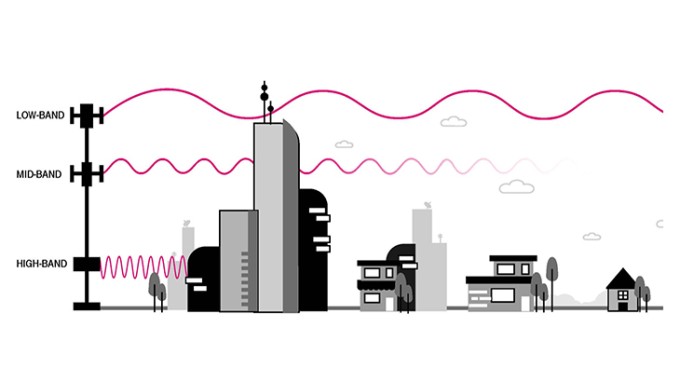
Image Source: T-Mobile
The radio spectrum ranges from 3 kHz to 300 GHz. 5G frequencies are divided between the 600 MHz and 39 GHz range. Cellular carriers have the right to different 5G bands to deliver their network without interfering with each other. Because different frequencies behave differently, they affect how far signal travels, how well it penetrates buildings, and how fast data can move.
The 5G spectrum is made up of three layers: Low-Band, Mid-Band, and High-Band (aka mmWave). Let's break down each 5G frequency band so you can understand how they work and where you are most likely to encounter them.
Low-Band 5G
Low-band 5G covers the lowest portion of the 5G frequency range, and is often marketed as “Nationwide 5G” by Verizon or “Extended Range 5G” by T-Mobile. It focuses on broad coverage rather than peak speed.
- Frequency Range: Typically 600 MHz to 1 GHz. Some sources say it covers up to 2.3 GHz.
- Characteristics: Travels long distances and penetrates walls better than other 5G bands
- Performance: Speeds are similar to strong 4G LTE, sometimes slightly faster
- Usage: Widely available in rural areas, suburbs, and cities
- Limitations: Lower capacity and slower speeds compared to mid-band and high-band
Low-band 5G often operates alongside existing 4G frequencies using a method called Non-Standalone 5G. This setup allows carriers to deploy 5G quickly by sharing infrastructure with 4G networks. In many cases, this is why you may notice that low-band 5G does not feel dramatically different from LTE.
Mid-Band 5G
Mid-band 5G is where you start to notice real improvements. It sits in the middle of the 5G frequency range and gives you a strong balance between speed and coverage.
- Frequency Range: Generally 1 GHz to 6 GHz, but considered to be more in the 2.4 GHz to 4 GHz range.
- Characteristics: Covers wide areas while still delivering meaningful speed upgrades
- Performance: You can see speeds between 300 Mbps and 1 Gbps, depending on location and network traffic
- Usage: Common in cities and suburbs where more people are using data at the same time
- Limitations: Does not travel as far as low-band and can still struggle inside dense buildings without support
If you live or work in an area with mid-band coverage, your phone will likely feel faster and more responsive than on low-band 5G. Downloads finish quicker, video streams load faster, and network congestion is often less noticeable.
A key part of mid-band 5G is C-band, which operates roughly between 3.7 GHz and 3.98 GHz. This portion of the 5G spectrum has become especially important because it delivers strong speeds without the severe range limits of high-band mmWave, which we'll explain in the next section.
If you run a business, this matters even more. Many offices, warehouses, and commercial spaces are working to improve C-band coverage indoors to handle increased data demand, connected devices, and cloud-based operations.
Unlike low-band 5G, which often shares infrastructure with 4G, most mid-band deployments operate as Standalone 5G. That means your device connects directly to a 5G core network, allowing for better performance and lower latency.
High-Band 5G (mmWave)
High-band 5G operates at the top end of the 5G frequency range. This is where you see the highest speeds, but also the most limitations.
- Frequency Range: Generally 24 GHz to 39 GHz
- Characteristics: Extremely high data capacity but very short range
- Performance: Can exceed 1 Gbps and reach several gigabits per second under ideal conditions
- Usage: Deployed in dense urban areas, stadiums, airports, and large venues
- Limitations: Signals travel short distances and struggle to penetrate walls, windows, and other obstacles
If you connect to high-band 5G, your speeds can be dramatically faster than both low-band and mid-band. However, coverage is limited to small areas, and even moving indoors can cause the signal to drop.
Because high-band operates on the millimeter wave spectrum, it does not rely on 4G infrastructure. These deployments function independently as Standalone 5G. That independence allows your device to respond more quickly to actions, with less delay between sending and receiving data, and it can support many users at once in crowded areas. However, it requires dense infrastructure to maintain consistent coverage.
For most people, high-band 5G is something you experience in specific hotspots rather than across an entire city.
What 5G Frequencies Does Each Carrier Use?
Not all cellular carriers use the same 5G frequency bands. Below is a breakdown of primary 5G frequency bands used by major U.S. carriers. Actual availability depends on your location and device compatibility.
|
Carrier |
Low-Band 5G |
Mid-Band 5G |
High-Band (mmWave) |
|
850 MHz (n5) |
3.45 GHz (n77), 3.7 GHz C-Band (n77) |
24 GHz (n258), 28 GHz (n261), 39 GHz (n260) |
|
|
850 MHz (n5), 1700/2100 MHz (n66), 1900 MHz (n2) |
3.7 C-band (n77) |
28 GHz (n261), 39 GHz (n260) |
|
|
600 MHz (n71) |
2.5 GHz (n41), 1.9 GHz (n25), 3.7 GHz C-band (n77 in select markets) |
24 GHz (n258), 28 GHz (n261), 39 GHz (n260) |
|
|
U.S. Cellular 5G |
600 MHz (n71) |
3.7–3.98 GHz (n77 in limited markets) |
24 GHz (n258), 28 GHz (n261), 39 GHz (n260) |
|
Cricket Wireless 5G |
850 MHz (n5 via AT&T) |
3.7–3.98 GHz (n77) |
Limited/Select areas (via AT&T) |
|
Boost Mobile 5G |
600 MHz (n71), 700 MHz (n29), 1700/2100 MHz (n66/n70) |
2.5 GHz (n41 in some markets), 3.45 GHz (n77) (via roaming/DISH) |
Not widely deployed |
|
Metro by T-Mobile 5G |
600 MHz (n71 via T-Mobile) |
2.5 GHz (n41 via T-Mobile) |
Available where T-Mobile mmWave exists |
*This table is subject to change, as more frequencies are auctioned off for use. Band availability varies by market and device compatibility, which is why it's important to check with your carrier for the most up-to-date information and location-specific details.
How Do I Know Which 5G Frequency Band I'm Connected To?
The easiest way to identify which 5G band you're connected to is by looking at the 5G signal icon on your phone.
AT&T, Verizon, and T-Mobile all display the standard 5G icon when connected to low-band frequencies. The icon changes for Mid- and High-Band 5G. AT&T uses 5G+, T-Mobile uses 5G UC (Ultra-Capacity), and Verizon uses 5G UW (Ultra-Wideband).
To identify the exact 5G frequency band, signal strength apps, like Network Cell Info, can help. This method will only work for Android devices. Unfortunately, the Apple store doesn't offer signal strength apps that work right now.
Why Are 5G Bands Important?
Every year, the number of cellular devices connected to the cellular network increases. It's not just your smartphone anymore. It is security systems, routers, wearables, vehicles, and IoT units. Older generations of wireless technology could only support so many devices at once. When networks became congested, speeds slowed, and reliability dropped.
5G changes that by increasing capacity and distributing demand across different frequency bands. Using a mix of low-, mid-, and high-band 5G allows carriers to balance coverage, speed, and network load. This opens the door for new use cases, such as smart cities, autonomous vehicles, digital health, drones, and much more.
For rural areas where cell towers are sparse, coverage matters most to reach as many devices as possible. Low-band 5G travels farther and helps connect devices across large distances. In suburban and urban areas where more people are using data at the same time, mid-band and high-band 5G provide the added speed and capacity needed to keep connections stable.
Different 5G frequency bands are not just technical layers. They are what allow your network to handle more devices, faster data, and growing demand without breaking down.
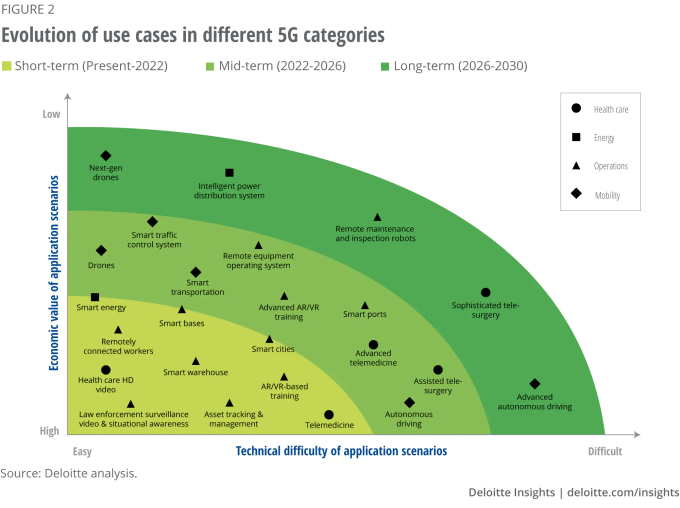
Image Source: Deloitte
How to Improve 5G Signal Indoors
Even if 5G is available in your area, indoor signal can still be weak. Walls, windows, insulation, and building materials can block or weaken higher 5G frequencies, especially mid-band and high-band signals.
One option is a 5G-ready cell phone booster for your home, vehicle, or small business. These systems capture an existing outdoor signal, amplify it, and rebroadcast it inside.
It is important to understand how this works. Most current signal boosters support Non-Standalone 5G, which operates alongside supported 4G LTE frequencies. If your carrier's 5G is using those shared LTE bands, a booster can improve your signal strength, call quality, and data stability.
Most powerful and popular 5G-ready cell phone booster for vehicles. Multiple configurations available for different vehicle types.
Learn MoreHowever, signal boosters do not amplify all 5G frequencies. High-band mmWave and some Standalone mid-band deployments cannot be boosted with traditional consumer signal boosters. Specialized C-Band cell phone signal boosters are available for commercial applications.
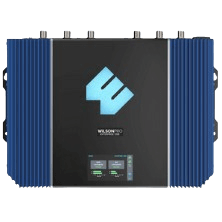
Powerful commercial booster designed to enhance in-building 5G C-Band coverage. Scalable solution.
Learn MoreIf you are looking to improve indoor signal coverage, explore our 5G-ready cell phone boosters or call us at 1-800-568-2723 to speak with a specialist about your specific setup.
We fix poor cell phone signal! Find the right signal booster for you:




FAQs
Does 5G Use the Same Frequencies as 4G?
How Do I Connect to Different 5G Bands?
What Is the Best Frequency for 5G?
What 5G Band Is Fastest?
Who Has the Most 5G Coverage?
How to Block 5G Frequencies from Your Phone?


Money Back Guarantee

Technical Support